
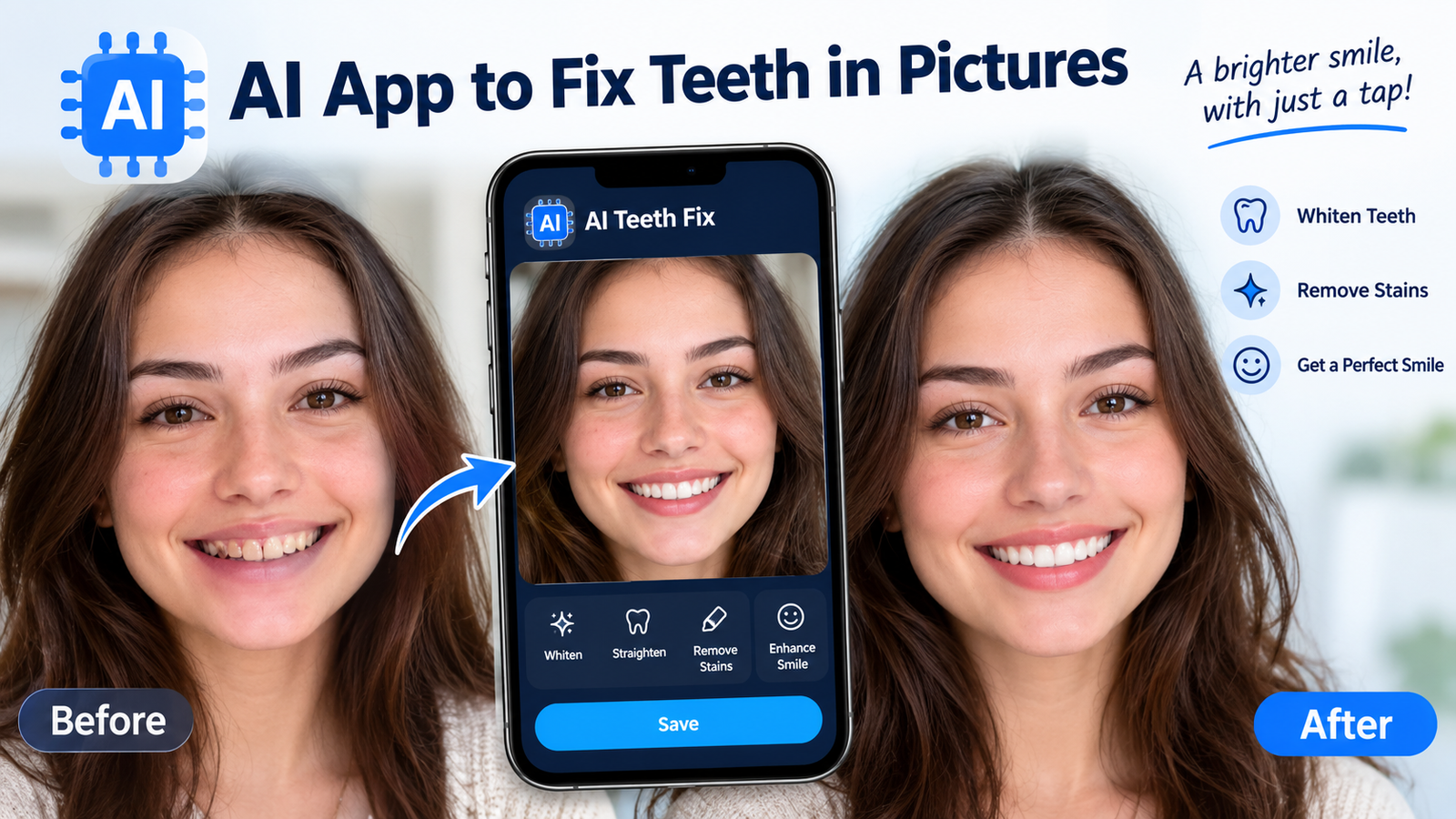
An AI app to fix teeth in pictures uses artificial intelligence to automatically detect teeth in a photo, then whiten, brighten, or straighten them while leaving the rest of the image untouched. These tools work by analyzing the uploaded photo, isolating the teeth region, and applying targeted adjustments rather than editing the whole picture, which keeps results looking natural instead of artificially filtered. Popular options include Aragon AI, FlexClip, Retouch4Me, Evoto, and YouCam, each offering slightly different approaches to the same core task.
How Does an AI Teeth-Fixing App Actually Work?
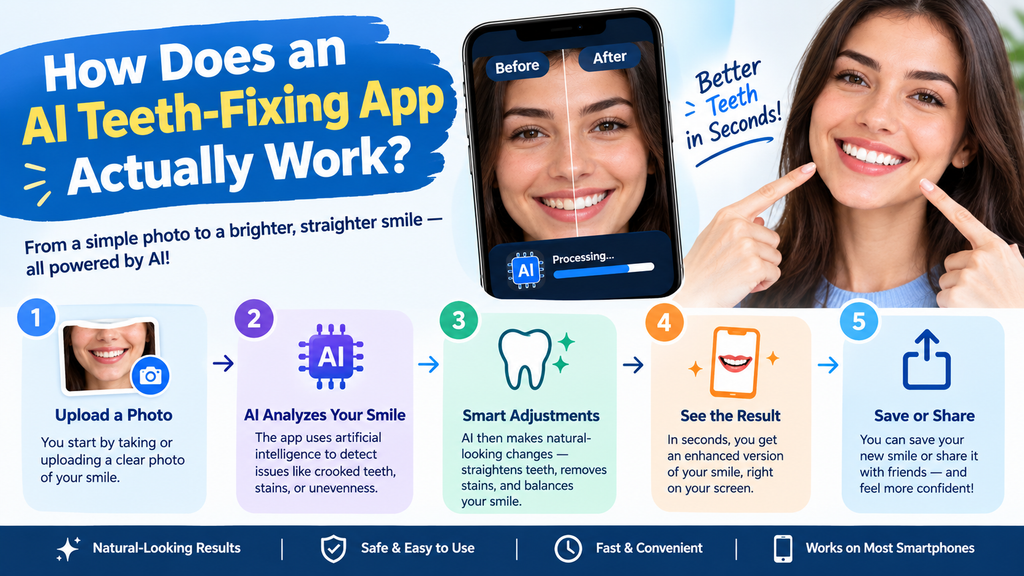
An AI teeth-fixing app works by using computer vision to detect the mouth and teeth within a photo, then applies brightness, color, and shape corrections only to that isolated area. Tools like Aragon AI’s teeth editor let users upload a photo, choose whether to whiten, straighten, or do both, and the AI adjusts the teeth while keeping the rest of the image exactly the same. This selective editing approach is what separates dedicated teeth-fixing tools from a basic photo filter, which would adjust brightness or color across the entire image rather than targeting just the smile.
More advanced tools extend beyond simple brightening. FlexClip’s AI photo editor, for example, is designed to study the original photo, adjust brightness, and smooth teeth imperfections including yellowing, unevenness, or crookedness while preserving the natural texture of the teeth rather than applying a generic, one-size-fits-all smile.
What Teeth Problems Can These Apps Fix?
AI teeth-fixing apps can address a range of common photo issues, from discoloration to misalignment and missing teeth. The most frequently cited problems these tools target include yellow or stained teeth, uneven or crooked teeth, and even missing teeth that a user wants corrected for a cleaner final image. Tools like Retouch4Me’s White Teeth feature specifically focus on automatically detecting teeth, removing yellow discoloration, and evenly whitening teeth without losing natural texture or detail.
Can These Apps Fix Group Photos?
Capability varies significantly by tool when it comes to multiple faces in one image. Some apps are built specifically to handle this scenario; Retouch4Me, for instance, is designed to keep lighting balanced across multiple faces so every smile in a group or wedding photo looks harmonious. Others are more limited: FlexClip’s teeth fixer, as one example, is not designed to handle teeth correction across a group photo with several people at once.
Which AI Apps Are Best for Fixing Teeth in Photos?
The right app depends on whether a person wants a quick mobile fix, a browser-based tool, or professional-grade retouching software. Several platforms have built dedicated reputations around this specific feature set, each with different strengths in speed, control, and output quality.
Mobile and App Store Options
Teeth Whitener: AI Photo Edit is a dedicated iOS app offering automatic teeth detection in any selfie, a whitening tool that removes stains and discoloration, and a Teeth Glow feature that adds brightness and a healthy appearance to the smile. Facetune is also commonly used for this purpose, though it relies on a manual “Whiten” brush rather than fully automatic detection, giving users more hands-on control at the cost of needing to do the work themselves.
Browser-Based and Professional Tools
Evoto positions itself as a more automated alternative to manual brush-based editing, with its AI designed to detect and whiten teeth naturally without over-editing or requiring the user to manually brush the area, while focusing on preserving a realistic result rather than an overly bright, artificial-looking smile. For users needing more advanced corrections like straightening or fixing gaps, tools such as YouCam’s online editor use an AI Replace feature where a user highlights the teeth area and enters a text prompt describing the correction needed, offering more precise control than simple one-click whitening.
How Do You Fix Teeth in a Photo Using AI?
Fixing teeth in a photo with AI typically follows a simple, consistent process across most tools regardless of which app is used. The general steps are to upload a clear photo showing the smile, select whether the goal is whitening, straightening, or both, let the AI automatically detect and isolate the teeth region, and then download the adjusted image once the edit is complete.
- Upload the photo. Choose a clear, well-lit image where the teeth are visible, since AI detection works more reliably on sharper, better-lit photos.
- Select the correction type. Most apps let users choose whitening, straightening, or both in a single pass.
- Let the AI process the image. The tool detects the teeth automatically and applies adjustments only to that region.
- Review and download. Check the result for a natural look before saving or sharing the final photo.
What Should You Consider Before Using One of These Apps?
Privacy and realism are the two biggest factors to weigh before choosing an AI teeth-fixing tool. Many of these apps process photos through cloud-based servers, which means checking a tool’s privacy policy matters, particularly for apps that explicitly disclose data handling practices in their app store listings. Realism is equally important: over-editing can produce an artificial, filtered look that undermines the goal of a polished but believable photo, so tools that preserve natural texture and avoid uniform, overly bright results tend to produce more convincing outcomes.
Common Misconceptions About AI Teeth-Fixing Apps
A common misconception is that all teeth-fixing apps work the same way and produce identical results. In practice, some tools rely on fully automatic AI detection while others require manual brushing or prompt-based input, which leads to noticeably different levels of control, speed, and realism between tools. Another misconception is that these apps can permanently or physically change someone’s teeth; in reality, they only edit the photo itself and have no effect on a person’s actual dental condition, meaning the corrected smile exists solely within that specific image.
Some users also assume these apps work equally well on old or low-quality photos. AI detection accuracy depends heavily on image clarity and lighting, so a blurry or poorly lit original photo is likely to produce a less convincing final result regardless of which app is used.
Conclusion
An AI app to fix teeth in pictures gives users a fast, targeted way to whiten, brighten, or straighten a smile without editing the rest of the photo, with options ranging from simple mobile apps like Teeth Whitener to more advanced tools like FlexClip, Evoto, and YouCam for precise corrections. Choosing the right tool depends on whether the priority is speed, manual control, or handling more complex issues like gaps or group photos. Readers exploring this topic further might also look into broader AI photo retouching tools or privacy considerations when uploading personal photos to cloud-based editing platforms.